Buying guide
Sea buckthorn processing: the line, the machines and what a unit costs
By Editorial team · Updated
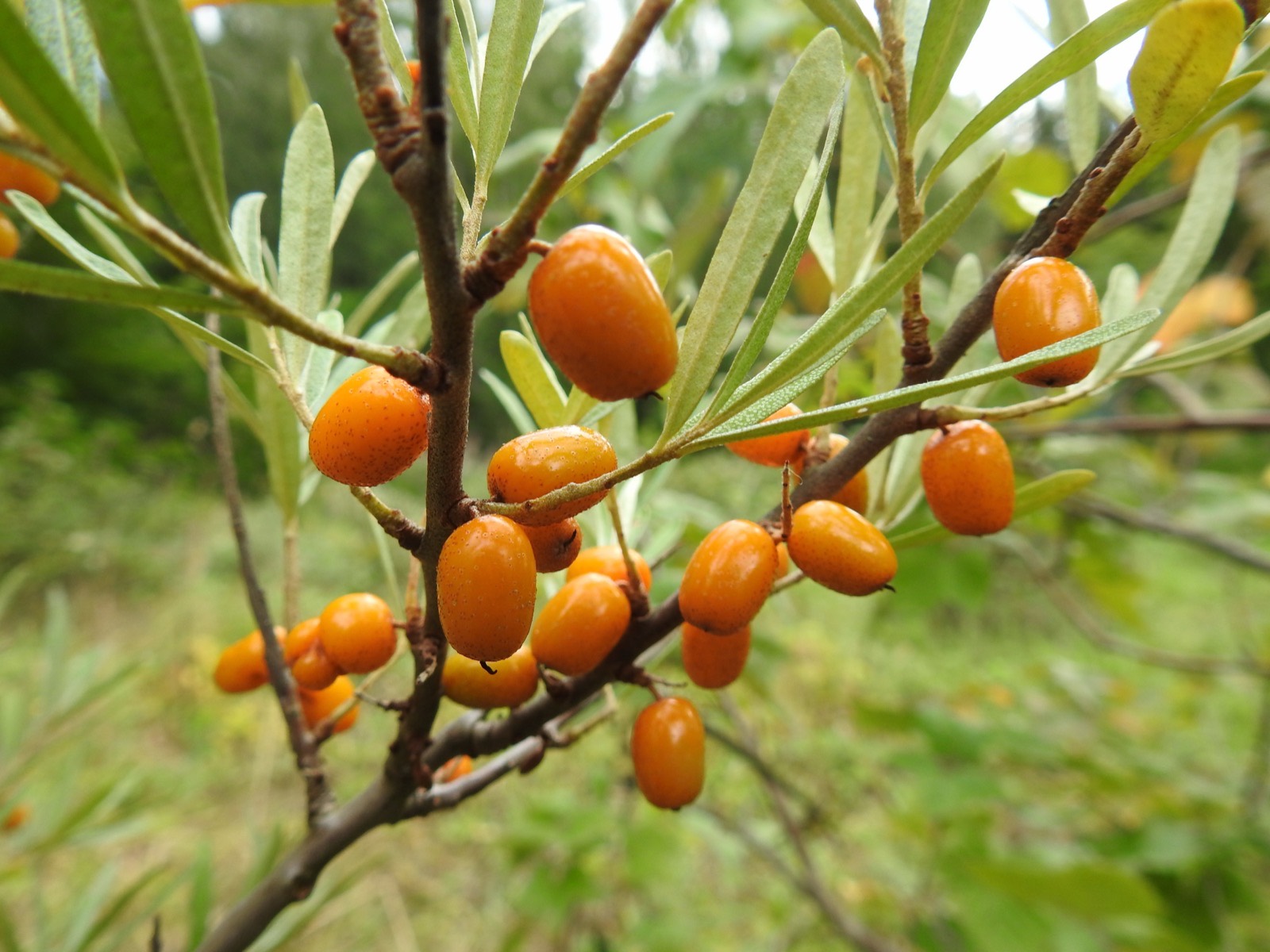
Short answer: a sea buckthorn unit turns orange berries into bottled juice in nine steps: clean, wash, pulp, separate the oil-rich cream, filter, blend with syrup, fill and cap, pasteurise, then cool and label. One line gives three products:
- juice (the opalescent liquid that becomes the drink),
- cream that carries the pulp oil, about 3 to 4% of the juice mass,
- cake of seed and skin, about a quarter of the berry weight, which is dried for seed and hull.
This guide follows the model unit in the PM-FME detailed project report (DPR) written by NIFTEM-Thanjavur, the National Institute of Food Technology Entrepreneurship and Management at Thanjavur. We are independent publishers: we do not grow, process or sell sea buckthorn, and we do not sell machines. For the crop itself (where it grows, the species, the harvest), see our sister guide to sea buckthorn in India.
Why is sea buckthorn hard to process?
The DPR names three things that make it hard.
- It spoils fast. Over-ripe berries carry a strong musky smell and a rancid taste, "detectable even in the field"; washing may reduce or change the smell but is no cure. Berries must be picked at the right stage, moved quickly and cooled to 4 to 6 °C. If they are to be kept more than a few days they should be frozen, preferably by individual quick freezing (IQF), and thawed when needed.
- The juice carries oil. Left to stand, raw juice splits into three layers: a thick orange cream with the oil on top, the liquid in the middle and sediment at the bottom. Oil left in the drink forms a ring inside the bottle.
- Harvesting is crude. Berries are beaten or broken off the thorny branches, so a lot of leaves and twigs arrive with them. The DPR puts the cleaning loss at about 13%.
How does a sea buckthorn juice line work, step by step?
| Step | What happens | Machine | Figure in the model DPR |
|---|---|---|---|
| 1. Inspection and cleaning | Berries roll down a wet board set at 40–50°; leaves and damaged berries stick and are picked off by hand | Inclined wet board (7′6″ × 3′), cleaning machine | Process loss about 13 ± 3% |
| 2. Washing | Remaining leaves and damaged berries float off; berries are drained | Spray or bubble washer, or by hand | — |
| 3. Pulping | Berries are pulped; unbroken seed and skin leave as a cake | Pulper | Pulp 74 ± 3%, cake 24 ± 3% |
| 4. Clarification | Juice is split into an oil-rich cream and opalescent juice; sediment is thrown out | Cream separator / disc-stack centrifuge | Cream 3–4% of juice mass; oil in juice below about 0.1% |
| 5. Filtration | Remaining sediment is removed | Vibratory filter | — |
| 6. Syrup and blending | Sugar is dissolved in warm water, juice and permitted additives are blended in | Blending tank | 1 L juice + 1.4 kg sugar + 7.6 kg water → 10 L at 15% TSS |
| 7. Bottling, exhausting, capping | Beverage is filled into sterile bottles; headspace air is removed; bottles are capped | Bottle filler and capper | — |
| 8. Pasteurising | Capped bottles are heated in a tunnel or batch pasteuriser; or the beverage is UHT-treated and packed aseptically | Pasteuriser and boiler, or UHT with plate/tubular heat exchanger | 95 °C for 3 min; or UHT 115–118 °C for 3 s |
| 9. Cooling, labelling, storage | Bottles are cooled to room temperature, labelled and stored | — | — |
Source: NIFTEM-Thanjavur model DPR (PM-FME), sections 2.1.1–2.1.9 and Annexure. “—” means the DPR gives no figure.
The step that sets sea buckthorn apart is clarification. The DPR uses a cream separator, the same kind of machine that splits cream from milk. It splits the juice into a fat-rich cream and an opalescent juice, and the sediment collects at the bottom of the bowl. Bringing the oil in the juice below about 0.1% stops the floating oil problem. A disc-stack centrifuge with automatic discharge throws the coarse sediment out without stopping. Ask any separator maker for a trial on your own juice: none of the maker pages we read mentions sea buckthorn.
For the pasteurising step, the DPR prefers a short hot treatment because the juice is delicate: 95 °C for 3 minutes for capped bottles in a tunnel or batch pasteuriser. The alternative is UHT in a plate or tubular heat exchanger, at 115 to 118 °C for 3 seconds, with the drink packed aseptically into cartons, plastic bottles or bag-in-box for bulk. Bottles are filled and capped on filling machines.
What does the FSSAI rule say? The DPR says a ready-to-serve (RTS) drink should have at least 10% fruit juice, 10% total soluble solids and about 0.3% acid. FSSAI's current text is narrower. Its standard 2.3.10 for thermally processed fruit beverages, fruit drinks and RTS fruit beverages (compendium Version XXV, 23 September 2022) sets fruit juice content at not less than 10.0% by mass, or 5.0% for lime and lemon. The line that once set a soluble-solids minimum is marked as omitted, and the standard sets no acidity figure. So the 10% juice minimum is the legal floor; the soluble solids and acid figures are the DPR's process targets. Check the latest compendium before you fix your label.
What happens to the seeds and the oil?
The pulper leaves a cake of unbroken seed and skin, 24 ± 3% of the berry. NIFTEM describes small units sun-drying the cake and rubbing it by hand to separate clean seed from hull. Both carry oil, and the DPR says the seed has been in demand since 2011 for its oil, which is "generally extracted by supercritical CO2". The cream from the separator carries the pulp oil.
The DPR quotes these prices without a date: pulp Rs 110 to 120 per kg, clean seed Rs 250 to 300 per kg, hull Rs 20 to 30 per kg and dried whole berry Rs 200 to 300 per kg. It also says sun-drying 100 kg of cleaned berries gives about 33 kg of dried berry and takes more than a month. Treat all of these as the DPR's own figures, not current market prices. If you buy or sell these products, our sister buyer's guide covers sea buckthorn products from India.
The machines, one by one
| Machine | Job | Power (DPR) | Floor area, sq ft (DPR) | Price assumed in the DPR | What to ask a maker |
|---|---|---|---|---|---|
| Weighing scale | Weighs berries in and product out | 0.5 HP | 50 | Rs 1.00 lakh | Capacity and accuracy at your lot size |
| Cleaning machine | Removes leaves, twigs and damaged berries | 2 HP | 100 | Rs 1.00 lakh | How it handles small, soft berries without bursting them |
| Washer | Washes and drains berries | 5 HP | 100 | Rs 2.00 lakh | Spray or bubble type; water use; drain section |
| Pulper | Separates pulp from seed and skin | 5 HP | 100 | Rs 3.00 lakh | Sieve size for a small-seeded berry; seed breakage; SS 304 or 316 contact parts |
| Clarifier (cream separator) | Takes the oil-rich cream out of the juice | 5 HP | 100 | Rs 3.00 lakh | Trials on sea buckthorn juice; oil left in juice; how solids are discharged; CIP |
| Blending tank | Dissolves sugar and blends the beverage | 2 HP | 50 | Rs 2.00 lakh | Jacket and stirrer; volume against your batch |
| Bottle filler and capper | Fills and caps bottles | 2 HP | 100 | Rs 3.00 lakh | Bottles a minute; hot-fill rating; cap type |
| Pasteuriser | Heats capped bottles (95 °C, 3 min) | 5 HP | 50 | Rs 3.00 lakh | Tunnel or batch; temperature record; cooling section |
| Boiler | Steam for pasteurising and blending | 5 HP | 100 | Rs 2.00 lakh | Steam output against the pasteuriser; fuel; licence needs |
Source: NIFTEM-Thanjavur model DPR, Table 5 (total Rs 20.00 lakh). The prices are the DPR's assumptions, not quotes; the PDF is dated December 2025 and the DPR gives no date for its prices.
NIFTEM's model unit in numbers
The DPR is a template for upgrading an existing micro unit that already has its land and 6,000 sq ft of built-up area. It adds 1,000 sq ft of building at Rs 200 per sq ft.
| Item | What the model DPR assumes |
|---|---|
| Capacity | 120 t of sea buckthorn beverage a year; 300 days, 8–10 hours a day |
| Capacity used | Year 1 construction; 60%, 70%, 80%, 90% in years 2–5; 90% after |
| Berries needed | 0.043, 0.050, 0.057 and 0.064 t a day at 60–90% use |
| Project cost | Rs 32.10 lakh (Table 10; page 1 says Rs 32.01 lakh) |
| Cost split (Rs lakh) | Land and building 2.00; machinery 20.00; utilities 2.00; other fixed assets 2.00; pre-operative 0.25; contingencies 2.00; working capital margin 3.76 |
| Means of finance | PM-FME subsidy Rs 10.00 lakh (maximum); promoter Rs 7.10 lakh; term loan Rs 15.00 lakh at 12%, 5 years with 1 year grace |
| Manpower | 10 people, Rs 85,000 a month |
| Prices assumed | Berries Rs 65/kg; beverage Rs 130/kg; packaging Rs 60/kg |
| Recipe | 1 L juice + 1.4 kg sugar + 7.6 kg water → 10 L at 15% TSS; juice yield 44% at 10% TSS |
| Sales | Rs 85.80 lakh in year 2, Rs 140.40 lakh from year 6 |
| Profit after tax | Rs 6.04 lakh (year 2), Rs 15.98 lakh (year 3), Rs 20.00 lakh (year 4) |
| Ratios | Average DSCR 4.18; benefit-cost ratio 1.28; payback 4 years; break-even 45.73% of capacity in year 2 |
Source: NIFTEM-Thanjavur model DPR (PM-FME), chapters 3–4, Tables 10 and 12. These are a template's assumptions, not results of a real unit and not a forecast by us.
What to check before you rely on it
- The prices have no date. The PDF is dated December 2025, but its berry, product, machine and by-product prices carry no date.
- Two totals disagree. Page 1 gives the project cost as Rs 32.01 lakh; Table 10 gives Rs 32.10 lakh. We use Table 10.
- The loan share is mislabelled. The DPR labels the Rs 15 lakh term loan as 42% of the cost. Against Rs 32.10 lakh it is 46.7%.
- Its tables do not fully agree. At Rs 130 per kg, 72 t of beverage would sell for Rs 93.60 lakh, but the year 2 sales line shows Rs 85.80 lakh. The raw material cost line also implies more berry than the daily figure it gives.
- Its market data stops at 2023. Do not reuse its market sizes in your own report.
- Berry supply is the real limit. NIFTEM puts India's harvest at about 600 t of berries a year. Plan your supply contracts first.
PM-FME in short
The DPR is written for the Pradhan Mantri Formalisation of Micro Food Processing Enterprises (PM-FME) scheme. Its finance plan assumes the maximum Rs 10 lakh subsidy. Here is what the Ministry of Food Processing Industries' own scheme pages say:
| Who | What MoFPI's page says |
|---|---|
| Individual micro food processing unit (upgrading) | Credit-linked capital subsidy at 35% of the eligible project cost, up to Rs 10 lakh per unit; the owner puts in at least 10% and the rest is a bank loan |
| FPOs and producer cooperatives | Grant at 35% with credit linkage, plus training; maximum grant “as prescribed” |
| SHG members (as a single unit) | Credit-linked grant at 35%, up to Rs 10 lakh; SHG seed capital Rs 40,000 a member |
| Training | For units getting capital support, and for other existing units in the district that process the district's One District One Product (ODOP) product |
Source: Ministry of Food Processing Industries, PM-FME pages on individual units and on FPOs/SHGs/cooperatives (pages show “Last Updated: 10 Feb 2021”), read 21 Oct 2026.
The scheme was set up for 2020-21 to 2025-26. In May 2026 a ministry official told reporters it had been extended to September 2026 and that a proposal to continue it for five more years was being moved (The Hitavada, 23 May 2026). We found no official notice on what happens after September 2026, so ask your state's PM-FME nodal agency before you plan around the subsidy. We help you prepare; the scheme's authorities decide.
Who makes the machines?
We list only makers whose own website shows the machine. Inclusion is not a ranking or a recommendation, and "listed in the NIFTEM DPR" means the DPR names the company as a supplier.
| Maker | Where | Machines on its own site | Listed in the NIFTEM DPR |
|---|---|---|---|
| Acufil Machines | Kunnathur, Coimbatore, Tamil Nadu, India | Fruit and vegetable processing line (crushing, pulping, filtration, pasteurising, aseptic packing); bottle filling machine | Yes |
| Repute Engineers | Chinchwad, Pune, Maharashtra, India | RTS juice processing plants; juice lines with UHT and aseptic filling | Yes |
| Autopack Machines | Worli, Mumbai, Maharashtra, India | Liquid fillers (piston, linear, rotary) and screw cappers | Yes |
| Jwala Techno Engineering | Mumbai (works at Tarapur MIDC, Boisar), Maharashtra, India | Fruit pulpers, 500–5,000 kg an hour; coarse-cum-fine pulper | No |
| Alfa Laval | — | PurePulp disc-stack separators for juice clarification | No |
| GEA | — | Beverage separators for de-oiling juice and splitting oil emulsions | No |
| NATEX | Ternitz, Austria | Supercritical CO2 extraction plants, including for high-value special oils | No |
Read on each maker's own site on 21 Oct 2026. “—”: the page read does not say. None of these pages names sea buckthorn. Four other DPR suppliers (Gardners Corporation, Bajaj Machine, Delhi Industries, Geeta Food Engineering) and Bruckner Process Technologies could not be confirmed on a current own site and are left out.
We do not show maker prices here; ask each maker for a written quote. If you make pulpers, separators, pasteurisers, fillers or CO2 extraction plants and want to appear here, ask about a Featured Partner listing. Paid listings are always labelled "Featured Partner · paid placement" and never change the order of the list.
What to ask before you buy
Send every maker the same brief: berries per season, the months you can get them, fresh or frozen, and the products you want. Then ask:
- Has this pulper or separator run on sea buckthorn, or a similar small, oily berry? Can I see a trial?
- How much oil is left in the juice after the separator, and how is the cream collected?
- Which parts touch the product, and are they SS 304 or SS 316?
- What steam does the pasteuriser need, and does the quote include the boiler?
- Can the line run frozen berries outside the harvest season?
- What does the price include: GST, freight, installation, training, spares?